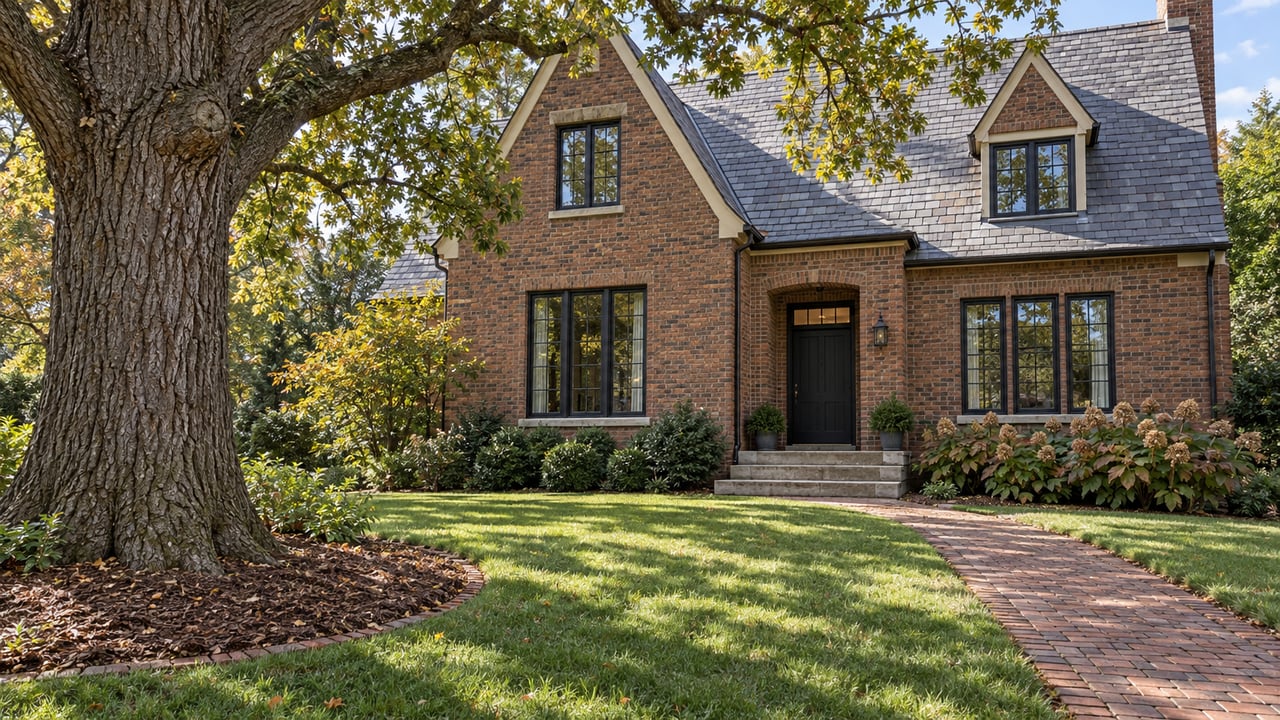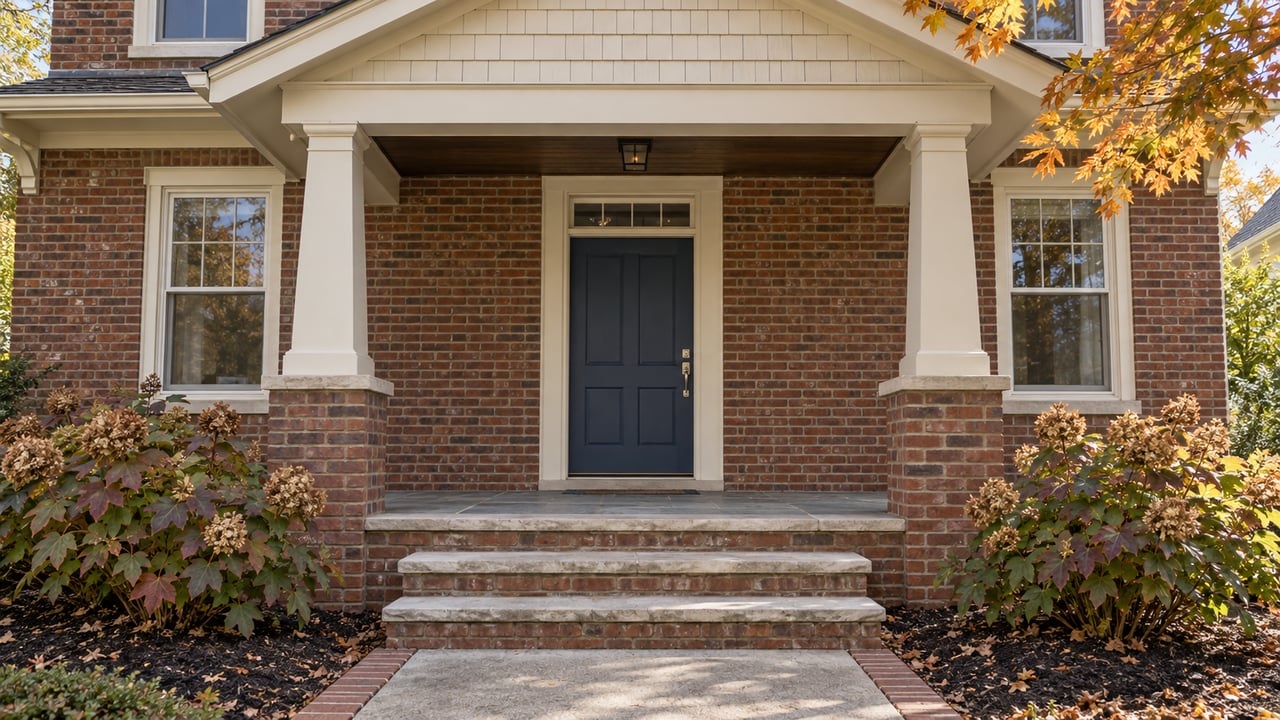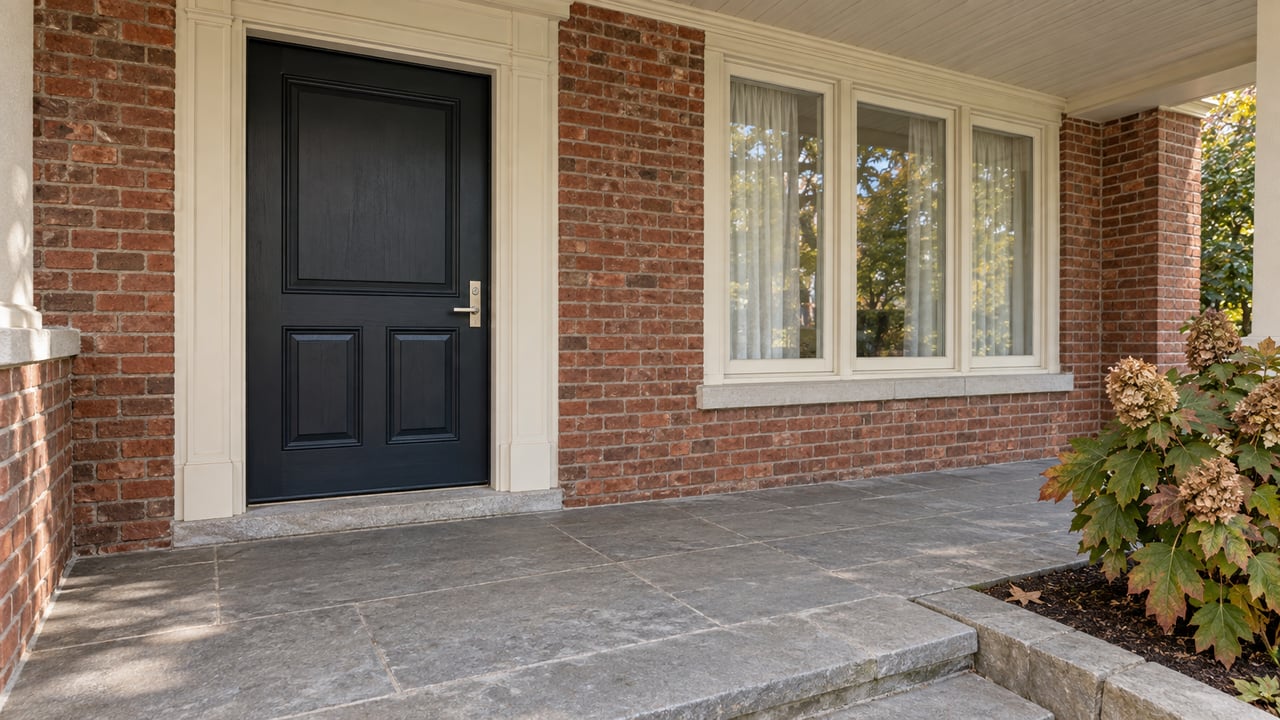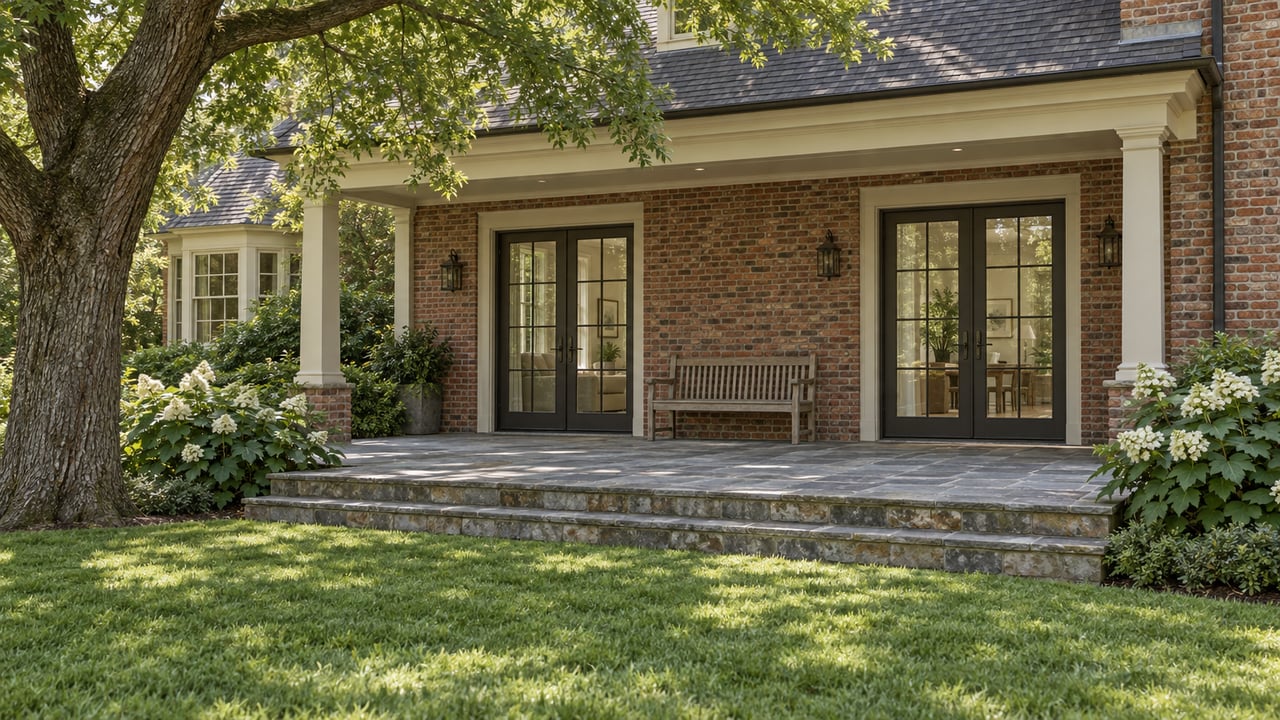
Every home on Peachtree Circle already carries a piece of paper that says it's historic. Ansley Park was added to the National Register of Historic Places in 1979, and Peachtree Circle sits inside that boundary along with the rest of the neighborhood. That designation didn't stop the new owners of 205 Peachtree Circle from tearing down a century-old American Craftsman home in January 2026 and clearing the acre-plus lot for something larger.
That's the detail that should reframe how you think about historic designation in Ansley Park. It isn't one thing. It's two different things that happen to share a name, and only one of them can actually stop a bulldozer.
Why the Same Street Has Two Different Kinds of "Historic"
National Register listing is a federal recognition of significance. It documents why a neighborhood matters architecturally and historically, and it can open the door to state rehabilitation tax credits. What it does not do is regulate what a private owner can build, alter, or remove. The National Park Service is explicit on this point: federal listing alone doesn't restrict private property owners unless a separate state or local rule applies.
A City of Atlanta Local Historic District is a different instrument entirely. It's granted by city ordinance, it's overseen by the Atlanta Urban Design Commission, and it requires a Certificate of Appropriateness before most exterior changes visible from the street, including demolition. Ansley Park has never had that second designation for the neighborhood as a whole. Two prior attempts to get it collapsed, the most recent in 2022 after a lawsuit from a property rights advocate ended the push.
The demolition of 205 Peachtree Circle is what restarted the conversation, not for the whole neighborhood this time, but for one street. If the Atlanta City Council approves it at its August 24 or September 8 meeting, Peachtree Circle becomes a Local Historic District on its own, a narrower and more precise tool than the neighborhood-wide version that failed twice before.
A Fight That's Still Unresolved
As of this writing, the outcome isn't settled. The proposal cleared two procedural hurdles in early August, first winning support from Neighborhood Planning Unit-E, then a 6-0 vote of support from the Atlanta Zoning Review Board. Six meetings with the Ansley Park Civic Association, the city, and NPU-E preceded that vote. The next and final step is the full City Council.
The residents who live there are not united on what this means for them. In a WSB-TV report, David Y. Mitchell, executive director of the Atlanta Preservation Center, made the case that the street's history justifies protection:
"Peachtree Circle exemplifies the transition from streetcar-era living to the automobile age, features an Olmsted-inspired landscape, and combines architecture, green space, and cultural history in a way that is uniquely Atlanta."
Peachtree Circle resident Drew Gandy asked the Zoning Review Board for a 60-day continuance so he could commission an independent appraisal of what the designation would do to his property value. The board didn't grant it. Gandy has said his concern isn't opposition to preservation in principle but to how this specific, narrower proposal is structured, and that a single-street designation could make it easier to extend the same restrictions elsewhere, one block at a time.
That tension, between a preservationist case built on architectural legacy and a resident asking for hard numbers before he'll sign off, is really the whole debate in miniature. Everyone agrees the street is historic. Nobody agrees on what formalizing that should cost a homeowner in flexibility.
What the Data Actually Says, and Where It Cuts Against the Easy Story
Most real estate content treats historic designation as a straightforward value driver, more prestige, more buyer interest, higher price per square foot. A recent hedonic study of residential property values in Atlanta specifically complicates that story. It found National Register listing associated with a 9 to 12 percent increase in prices. The same study found the opposite effect for local historic district designation in the period studied, a decrease rather than an increase.
That result lines up with the broader academic literature, which is genuinely split. Some studies of Texas, Memphis, and Columbia, South Carolina districts find local designation adds meaningful value, with gains in some cases reaching from the high teens to more than 25 percent over time. Others, including research on parts of Chicago, find local designation associated with lower prices instead, depending on how restrictive the rules turn out to be in practice. The honest summary is that the effect depends heavily on which kind of designation you're talking about, and on how much friction the resulting review process actually adds for a typical owner.
That friction is not abstract. A Certificate of Appropriateness process in a designated district generally adds four to eight weeks to a renovation timeline before a building permit can even be pulled, on top of the normal permitting schedule. For a buyer planning to add a garage, expand a kitchen, or build a deck, that's a real cost measured in carrying costs and delayed move-in dates, not just a bureaucratic inconvenience.
| National Register (all of Ansley Park, since 1979) | Local Historic District (proposed for Peachtree Circle only) | |
|---|---|---|
| Who grants it | National Park Service | City of Atlanta, by ordinance |
| Requires Certificate of Appropriateness | No | Yes, for exterior changes and demolition |
| Can block a teardown | No | Yes |
| Atlanta-specific price effect found in recent study | Increase of 9 to 12 percent | Decrease in the same study period |
| Adds review time to renovation permits | No | Typically 4 to 8 weeks |
What This Means If You're Looking at a Home Near Peachtree Circle Right Now
If you're evaluating a purchase or a listing anywhere in Ansley Park, the National Register plaque tells you almost nothing about what you can or can't do to the house. What matters is the parcel-level status, and that status is genuinely in motion on this one street. The Georgia Trust has flagged this exact gap for years, noting that Ansley Park's National Register listing has not, on its own, prevented the demolition of architecturally significant homes over the past decade.
If you're buying with renovation plans, that means confirming zoning and any overlay conditions before you write an offer rather than after closing. And it's worth remembering that Ansley Park's regulatory layers don't stop at historic review. The city's tree ordinance already requires a permit before removing any hardwood tree six inches or larger in diameter at breast height, a rule that matters here more than almost anywhere in the city given how many century-old specimen trees line these streets.
If you're selling, the calculus runs the other direction. A pending or newly finalized Local Historic District designation is the kind of fact a buyer's agent or attorney is going to ask about, and it's the kind of thing worth addressing before it becomes a surprise during due diligence rather than after. The street's own recent history offers both outcomes side by side. The Randolph-Lucas-Jones House, moved to Peachtree Circle and renovated by Roger Smith and his husband, preservation advocate Christopher M. Jones, is held up as a preservation success story. The house at 205 Peachtree Circle, torn down in January 2026, is the reason this entire process started. Both are on the same street. Only one of them would have been possible if the new designation had already been in place.
A Few Direct Questions
Does this only affect Peachtree Circle, or all of Ansley Park? Rough Draft Atlanta reports that, as proposed, it applies to Peachtree Circle alone, a single residential street running between Beverly Road and 15th Street. It does not extend to the rest of Ansley Park unless a future, separate process is initiated.
If City Council votes it down, what happens? The street reverts to its current status, protected only by National Register listing, which does not prevent demolition or require design review. That's roughly the position the whole neighborhood was in after the 2022 attempt collapsed.
Does National Register status alone mean I need city approval to renovate? No. National Register listing by itself doesn't trigger a Certificate of Appropriateness requirement. Only a City of Atlanta local historic district or landmark designation does that, and outside Peachtree Circle, Ansley Park does not currently have one.
Whichever way the City Council votes later this month or in September, the underlying lesson holds for anyone shopping or selling in this part of Intown Atlanta. A neighborhood's history and a specific parcel's legal restrictions are not the same question, and the gap between them is exactly where deals get complicated or, handled early, exactly where they don't.
If you're weighing a purchase near Peachtree Circle, considering a listing anywhere in Ansley Park, or just want a clear read on how a specific parcel's status could affect your renovation plans or your timeline, Ken Covers can walk through the parcel-level details with you before you're under contract, not after. Get your instant home valuation and consultation to start with real numbers instead of assumptions.
This article is general information, not legal, tax or financial advice. Consult a qualified professional about your situation.